
CPSN By The Numbers
- DISTRICTS & SCHOOLS
Career Technical Planning Districts: 10
Public Districts: 73
Joint Vocational School Districts: 7
Community Schools: 80
STEM Schools: 1
Percent of schools with CTE Participants: 46.6% (75/161)
Percent of schools with Middle School Participants: 31.7% (51/161)
Percent of schools with CTE Concentrators: 45.3% (73/161) - STUDENTS
Total students enrolled in grades 7-12: 167317
Total students enrolled in grades 7-8: 54196
Percent of students participating in CTE: 16.2%
Percent of students in grades 7-8 taking introductory CTE courses: 36.3%
Percent of students reaching CTE concentrator status: 9.1%
Grades 9-12 Chronic Absenteeism Rate: 35.3% - REGIONAL PARTNERS
Ohio Technical Centers: 7
Ohio Public Colleges and Universities: 4
Education Service Centers: 10
Active Business Advisory Councils: 14
The CPSN Story
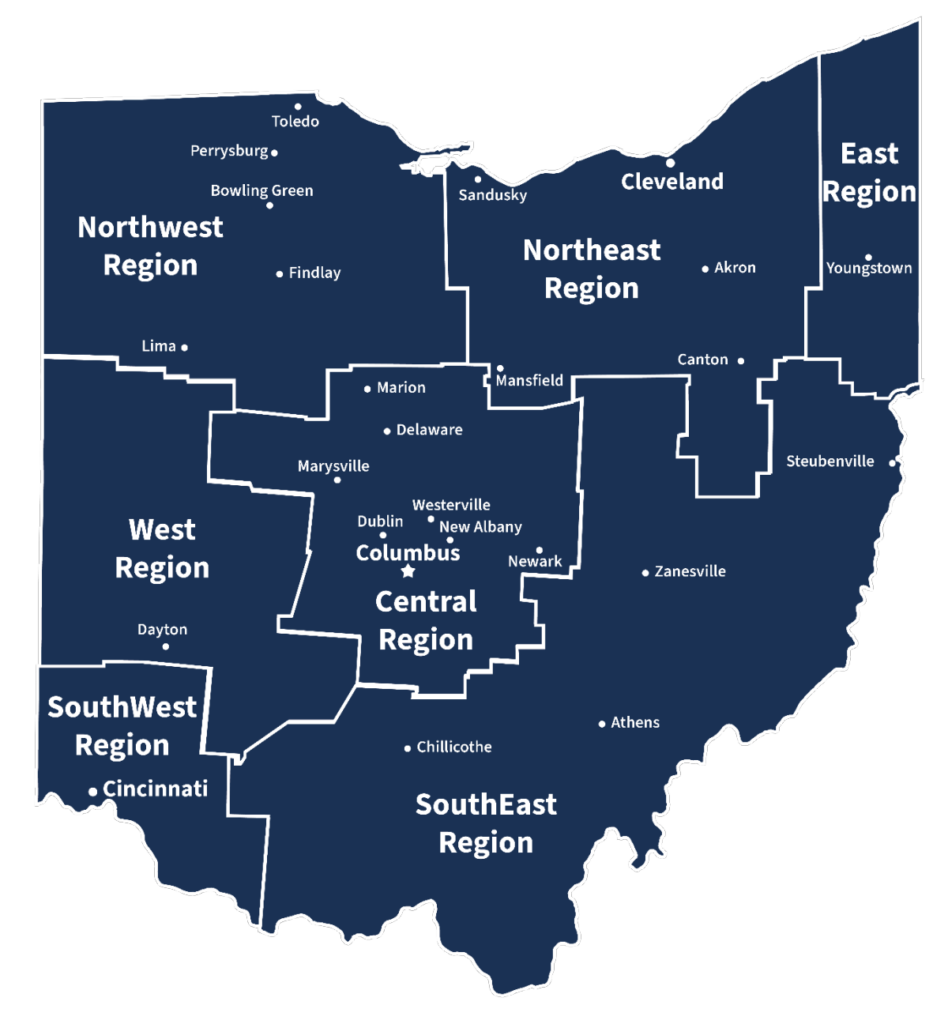
Ohio Governor Mike DeWine, Lt. Governor Jim Tressel, and Ohio Department of Education and Workforce (DEW) Director Stephen D. Dackin announced the recipients, including the ESC, of the Career Pathway Support Network Grant – a $7.1 million investment to bring career-connected learning opportunities and career planning support to more students across the state. The ESC will lead the Central Region network. The network will build on the foundation of the Tech Prep model but take a broader approach – increasing access to and participation in career-technical education for middle grades (7-10), ensuring all students receive high-quality career advising and mentoring, and aligning more closely with regional workforce needs through partnerships between schools and districts, institutions of higher education, and local employers.
The Central Region network will be guided by a regional steering committee, and the grant funds will be used to directly support career services provided to students enrolled in all community schools, STEM schools, affiliated higher education institutions, and school districts, including joint vocational school districts. The demand for career-technical education continues to grow in Ohio, with more than 141,000 students participating in at least one career-technical education course during the 2023-2024 school year. To build on this momentum, and to help ensure every student interested in career-technical education has access to it, the state is working to close participation gaps – especially in the 59 districts where high school career-technical education enrollment is currently below 10%
Our Core Objectives
Empowerment: This objective focuses on helping students discover their unique strengths and interests so they can build actionable, personalized plans for their futures.
Equity & Access: This pillar aims to ensure that every single student has a clear, supported path to success, completely independent of their background or starting point.
Economic Impact: This goal centers on strengthening the local workforce by directly aligning student skills and credentials with regional industry needs.
CPSN Ecosystem
Administrators
- Focuses on providing access to policy templates.
- Offers gap analysis tools and district-wide implementation strategies.
Educators
- Helps users find curriculum alignment guides.
- Provides professional learning resources and classroom activities.
Business & Industry
- Enables organizations to connect with schools for mentorships and internships.
- Focuses on actively shaping the future workforce.
Community & Parents
- Allows users to discover individual student pathways.
- Helps them understand graduation requirements and support overall student journeys.
Career Connections Continuum
Core Initiative: Named the Career Connections Continuum (part of “The Blueprint”), this is a statewide, student-centered initiative designed to help K-12 students seamlessly transition into college, careers, or the military.
Stage 1: Awareness (Grades K-5): Focuses on foundational exposure, helping students discover different types of jobs and the “world of work.”
Stage 2: Exploration (Grades 6-8): Students begin to align their personal interests and strengths with specific career paths.
Stage 3: Preparation (Grades 9-12): Focuses on “high-value” learning, credentialing, and narrowing down specific career choices.
Stage 4: Participation (Post-Graduation): Marks the actual transition into the workforce, college, or military service, where students apply their prepared skills.
The Role of CPSNs
Core Role of CPSNs: Act as regional partners working directly with districts to turn scattered programs into clear, scalable systems that align classroom learning with state readiness goals.
Key Objectives:
- Sync classroom learning with graduation requirements.
- Organize scattered programs into scalable systems.
- Integrate middle-school CTE directly to high school.
Gap Analysis: Identify missing career advising services within a district and create a clear roadmap for implementation.
Policy Development: Assist schools in revising, updating, and implementing comprehensive career advising plans that meet state standards.
Partnerships: Build strong bridges between schools and local businesses to facilitate mentorships and work-based learning.
Resources: Provide technical assistance, tools, and professional learning opportunities specifically for educators.
Watch Our Previous Meetings in this YouTube Playlist